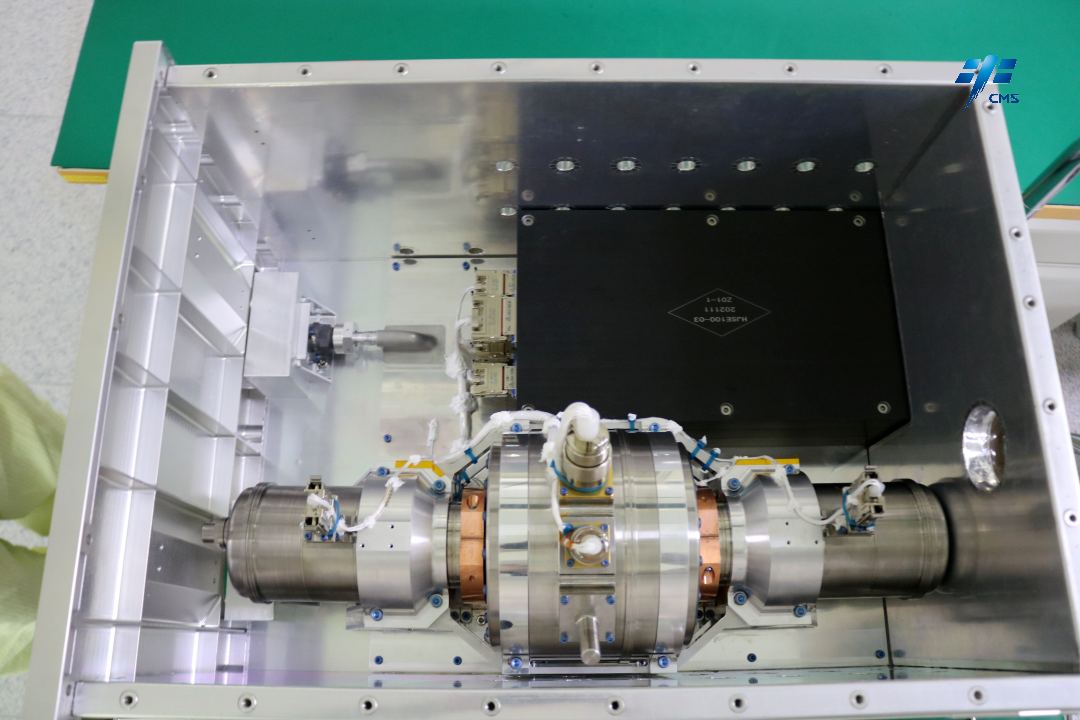
A 19th Century Technology with a 21st Century Role
New research offers realistic model for space conditions
chinese scientists have developed an improved model of the Stirling engine, which could become a key source of energy for future lunar bases. With leading space agencies planning to return people to the Moon and create permanent settlements, the task of power supply is becoming one of the most difficult. On the surface of the satellite, the alternation of day and night lasts for two weeks, so conventional solar panels are not always suitable here.
Major Lunar Base Projects by NASA, China, and Europe
These include projects already underway, such as NASA’s Artemis program , China’s International Lunar Research Station, and Europe’s Moon Village concept. All plan to locate bases near the Moon’s south pole, where water ice and sunlight are best available. But even there, a reliable, stable power source capable of operating in extreme conditions will be needed.
Why Stirling Engines Could Be the Key to Lunar Energy
One promising technology is Stirling engines, which are capable of using heat to generate mechanical energy. They are closed-loop and can be integrated with compact nuclear reactors. Such solutions are potentially suitable for the Moon and Mars, but until now it was unclear how effective they are in real extraterrestrial conditions. The reason is the lack of sufficient space test data.
How Chinese Scientists Created a New Space-Ready Engine Model
To fill this gap, a team of Chinese researchers from Chengdu University of Technology and the Institute of Nuclear Energy of China proposed an analytical model that can more accurately estimate the engine’s performance. The scientists took into account heat loss, leakage, flow resistance, and limited piston speed. This allowed them to build a model that is closer to the actual operation of the device than existing theoretical approaches.
What This Model Improves: Efficiency and Engine Design
According to Professor Fon, one of the authors of the study, the refined model allows for a deeper understanding of how parameters such as regenerator density or choice of working gas affect the efficiency and power of the engine. This data is important for the creation of compact power systems that can power not only lunar bases, but also be useful on Earth.
Validated by NASA’s 1970s Stirling Engine Tests
The model has already been tested using data from existing engines developed by NASA in the 1970s, such as the GPU-3 and RE-1000. The next stage of the work is to study the engine’s behavior during startup and in transient modes, which is especially relevant for space conditions, where system stability is critical.
What’s Next: From Model to Lunar Prototypes
If the development is successful, we could see prototype nuclear power systems based on this technology tested in conditions simulating the Moon or Mars in the near future. And then a step toward creating the first permanent settlements beyond Earth. This is especially relevant against the backdrop of the space race between the US and China, where Chinese plans to explore the Moon are causing serious concern to the US military.